English Food Vocabulary for Kids
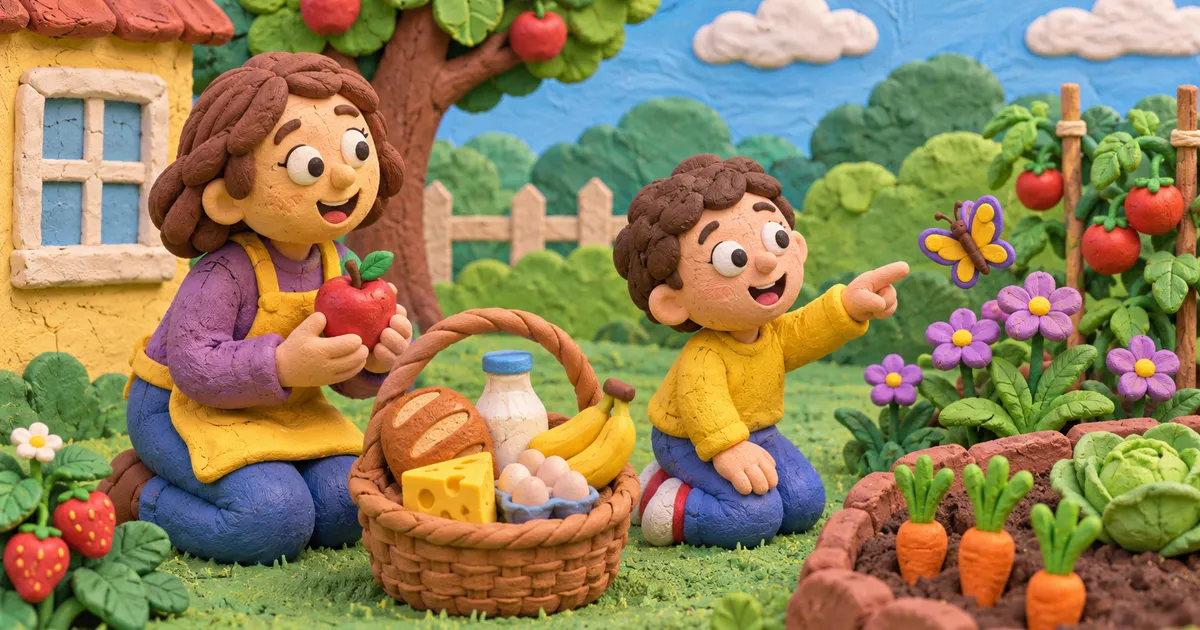
English food vocabulary for kids can begin with 20 foods a child can see, touch, choose, and name at the table. Start with family staples: apple, rice, bread, egg, milk, and water; another home may prioritise lentils, noodles, yogurt, or flatbread. Skip long memorisation lists. Connect each word with real food and a phrase such as “I like apples” or “Can I have water?” This guide covers a core set, sentence frames, age-based games, and corrections.
Start with a Teachable Core Set
Choose foods your child already knows. Familiar objects let the child focus on the English label. The table offers a balanced starting set, but replace items that do not fit your family’s culture, diet, allergies, or routines.
Teach english food vocabulary for kids in four steps: show the food, say the word, let your child point, then invite speech. Pointing is a valid first response. Next, add a short frame such as “This is rice” or “I want an apple, please.”
A multilingual child may know two or three labels for one food. Treat that as knowledge. Show the item and give its English name instead of testing translations. This links the object, meaning, and English word.
A five-minute first lesson
- Choose four foods your child recognises.
- Say each English word while pointing to the item.
- Ask your child to find one named food.
- Use each word in one short sentence.
- Review the same four words at the next meal.
📥 Food Words Practice Pack
Learn and practice basic English food words by group.
Leave your email — we'll send the PDF to your inbox.No spam — the PDF plus one short reminder. Unsubscribe anytime.
Fruits and Vegetables Children Can Name
Fruit words in English connect easily with colour, shape, smell, and taste. Hold up an apple and say, “red apple”; peel a banana and say, “yellow banana.” Begin with foods your child sees before adding unfamiliar picture-card items.
Keep english food vocabulary for kids manageable by adding three or four items at a time and reusing earlier words. A child might identify carrot, tomato, and potato first, then sort all six foods after learning broccoli, peas, and corn.
Practise plural forms with real food: one grape, two grapes; one strawberry, two strawberries. Use “fruit” for the category, as in “Fruit is on the table,” and “fruits” for different kinds. Let examples reveal the pattern before discussing the rule.
Grains, Proteins, Dairy, and Everyday Choices
Good english food vocabulary for kids reflects family meals. Add bread, rice, pasta, noodles, cereal, beans, lentils, eggs, fish, chicken, tofu, cheese, and yogurt when relevant. A child who eats lentil soup weekly needs “lentils” before a textbook-only food.
Pair nouns with descriptions: fresh fruit, frozen peas, salty soup, soft bread, grilled fish, and fried potatoes. Precise pairings communicate more than “good food” or “bad food.” Discuss frequent and occasional foods without judging another person’s plate.
Preparation, ingredients, portion, allergies, access, faith, and family custom shape food choices. Use factual language: “This drink is sugary,” “The vegetables are fresh,” or “Both dishes contain beans.” Food words should support description and comparison, not cause worry.
Two corrections
Myth: Every food fits a fixed healthy or unhealthy group.
Fact: Ingredients, preparation, amount, frequency, and individual needs affect the description.
Myth: A child must taste every food to learn its English name.
Fact: A child can point, sort, smell, describe, or compare food without eating it.
Turn Food Words into Real Sentences
Single nouns identify food; sentence frames support conversation. Keep the grammar stable and replace one word at a time. “I like apples” becomes “I like rice,” then “I like rice because it is soft.” Controlled changes build confidence without requiring a new sentence.
Practise english food vocabulary for kids through requests, preferences, and questions. Repeat the phrases at breakfast, while shopping, during cooking, and in pretend play. Changing settings strengthens retrieval while the language stays familiar.
• This is + food. This is an apple.
• I like / I don’t like + food. I like beans.
• I would like + food, please. I would like some bread, please.
• Can I have some + food? Can I have some rice?
• What’s for + meal? What’s for lunch?
• The + food + is + adjective. The carrot is crunchy.
• I prefer + food + because… I prefer oranges because they are sweet.
Accept honest preferences. “I don’t like this soup because it is too salty” needs no correction. Older learners can compare: “The grilled fish is less oily than the fried fish” or “Both meals contain rice.” Expand food nouns with adjectives for children such as sweet, sour, fresh, and crunchy.
Quick tip: Keep one sentence frame for a few days and change only the food word. Familiar grammar leaves more attention for recall and pronunciation.
Activities for Different Ages
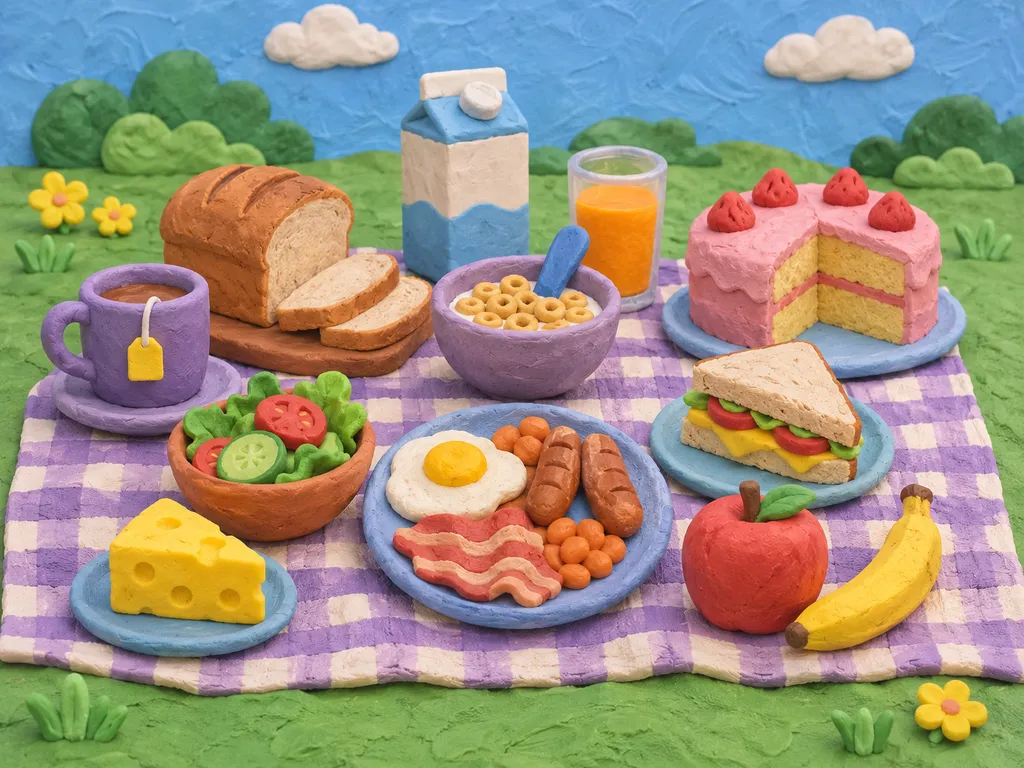
Adapt food-word tasks by age. Young learners need objects, pictures, and movement. Readers can match labels or build menus. Older learners can compare packages, discuss ingredients, or adapt recipes. The task grows while core vocabulary remains stable.
Match demand to ability. A beginner may listen and point before speaking. A child aged seven to nine can name, sort, and describe. An older learner can justify a choice or compare dishes. Apply the progression in English learning games and activities.
At home, weave english food vocabulary for kids into routines. Name three groceries while unpacking, ask one mealtime question, or play “Find something red” in the kitchen. Short, repeated recall creates regular chances to understand and speak.
Build a Pretend Lunch
Ask your child to choose four items from pictures, clean packages, or real food. Name each item and make four sentences: “My lunch has rice, beans, tomato, and water.” Add two descriptions: “The tomato is fresh” and “The beans are soft.” An older child can compare items or explain a choice.
Common Language and Teaching Mistakes
The hardest part of english food vocabulary for kids is often the small word around a noun. Children may say “a milk,” “two breads,” or “I eat water.” Keep the conversation moving and recast the idea: “You want some milk” or “Yes, you drink water.” The correction stays direct and gentle.
Countable foods take a number or a/an: an apple, two eggs, three carrots. Uncountable foods need some or a container: some rice, a bowl of rice, some bread, a slice of bread. Explain regional differences instead of marking them wrong.
Accept correct regional words. British English may use crisps, chips, biscuits, and fizzy drink; American English often uses chips, fries, cookies, and soda. Explain both and let the child stay consistent. Check uncertain pronunciation or meaning in the Cambridge Dictionary.
- Choose five familiar foods and model each English word before asking questions.
- Correct one error gently, then invite your child to repeat the full phrase.
- Avoid isolated translation drills; use a picture book to name foods in context.
- Sort eight food cards into fruit, vegetables, drinks, and snacks.
- Review English food vocabulary for kids by asking two simple choice questions.
Frequently Asked Questions
How Many Food Words Should My Child Learn First?
Start with about 20 words from foods your family sees often. For english food vocabulary for kids, a small set used in sentences beats a long list reviewed once. Add three or four words at a time, reuse earlier words, and expand the set after your child understands and uses most first words.
What If My Child Understands the Words but Does Not Say Them?
Let your child point, choose, match, or nod. Understanding often precedes spontaneous speech, especially for a first-time online learner or multilingual child. Model short phrases without demanding repetition. “Apple or banana?” offers an easier speaking prompt than “What do you want?”
How Can a Multilingual Family Practise Food Words?
Connect each English word directly to food, a picture, an action, or a taste. Comparing languages or mixing them occasionally does not mean failure. Show the item, name it, and model one English sentence. Keep every language your child already knows.
What If My Child Refuses to Taste a Food During Practice?
Separate language practice from pressure to eat. Your child can name, sort, smell, describe, or compare food without tasting it. Discuss colour, shape, texture, packaging, or preparation. Ask an appropriate health professional about allergies, growth, restricted eating, or an individual diet.
A short one-to-one lesson can show what level and pace fit your child — book a trial English lesson.
Stay updated on our latest tips and resources by following us on Instagram LearnLink.